

Why most animal communicators struggle with clients, and what actually works in a modern, ethical animal communication business
Most animal communicators don't quit their practice because they lose their connection.
They quit because they get tired.
Not tired of the animals.
Tired of the human side of the work.
Tired of:
- holding everyone's emotions
- over-explaining themselves
- justifying their work and their fees
- being "on call" energetically
- and never quite feeling like they're standing on solid ground
They don't struggle because they lack ability.
They struggle because the wrong clients find them.
They undercharge or overgive. They feel emotionally drained. And somewhere inside, they start wondering if this can ever become a real, sustainable profession.
If you've ever thought:
"Why am I working so hard and still not feeling stable or respected?"
"Why do I keep attracting needy, resistant, or exhausting clients?"
"Why does this feel so much harder than it should?"
You are not alone.
You love animals. You believe in the work. But the business side feels messy, draining, and strangely lonely.
Because nobody ever taught you how to hold this role as a professional identity — not just a psychic or intuitive gift.
The Real Problem Isn't Marketing
Most people assume the problem is:
- not enough visibility
- not enough social media
- not enough confidence
- not enough credentials
But after working professionally with animals and their people for over 30 years, I can tell you:
The problem is not your marketing.
The problem is how you are holding yourself in this profession.
You don't attract clients through tactics. You attract clients through professional identity, boundaries, and energetic positioning.
Why You're Attracting the Wrong Clients
Here's what I see again and again with talented communicators:
1. You're Still Holding Yourself as a Student — Not a Professional
So your energy says: "Please choose me, I need you to like me."
Instead of: "This is how I work."
Clients feel this immediately.
2. You're Over-Giving and Under-Charging
Which creates:
- resentment
- exhaustion
- blurred boundaries
- and unhealthy power dynamics
When your nervous system is dysregulated, your business will be too. Research on compassion fatigue in helping professions consistently shows that over-giving without clear boundaries leads to burnout — regardless of how much you love the work.
3. You're Trying to Save Instead of Serve
This is a big one in heart-led professions. If you're unconsciously trying to rescue clients, fix their animals, or prove your worth, you will attract emotionally dependent clients, crisis cases, and people who don't take responsibility.
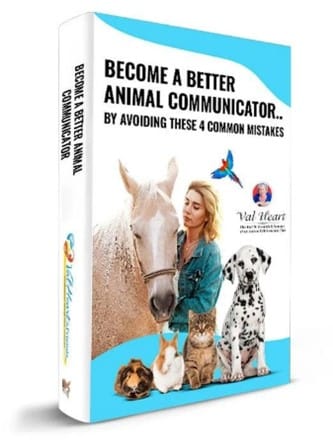
Are hidden habits quietly limiting your practice? Start here — it's free:
Becoming a Better Animal Communicator By Avoiding These 4 Common Mistakes — the foundational patterns that keep even gifted communicators stuck.
The Shift That Changes Everything
The moment your practice begins to stabilize is the moment you move from:
"I hope people choose me."
to
"I am a professional offering a specific service in a specific way."
This is the real beginning of a modern animal communication business.
Not hustling. Not branding. Not social media.
But professional identity.
What Professional Positioning Actually Means
A professional animal communicator:
- has clear boundaries
- has a defined scope of work
- does not over-explain or over-defend
- charges in alignment with energy and time
- works with clients who are ready and willing
- is not trying to convince anyone
In other words: you stop auditioning. You start relating peer-to-peer.
That shift alone changes who finds you.
A True Story From My Early Years
When I first began working professionally, I attracted a lot of frantic clients, skeptics, people wanting miracles, and people outsourcing responsibility.
I was gifted. I was trained. I was sincere.
But I was still holding myself as: "I hope I can help you." Not: "This is how I work."
Once I shifted my internal posture, my entire client base changed. Same skills. Same heart. Different identity.
The Nervous System Factor Nobody Talks About
Here's something almost no one teaches:
Your clients are responding to your nervous system, not your website.
If you are anxious about money, unsure of your value, afraid to say no, or emotionally over-invested, you will attract anxious clients, boundary-pushers, and emotionally draining dynamics.
This isn't spiritual. It's neurological. The Polyvagal Theory explains how our nervous system constantly broadcasts safety or threat signals — and other people (and animals) respond to that broadcast whether we're conscious of it or not.
Regulated practitioners attract regulated clients.
Why This Is a Field-Wide Issue
Animal communication as a field has very little professional mentoring, almost no ethical business education, no standard of practice, and a culture of "figure it out alone."
Which means most communicators are deeply gifted, deeply sincere — and quietly burning out.
Not because they're doing it wrong. But because they were never taught how to hold a professional role.
The Three Pillars of Attracting Ideal Clients
Professional Identity
Who are you being in the field? Are you auditioning — or showing up as the practitioner you already are?
Energetic Boundaries
How is your nervous system holding the work? Steadiness isn't coldness — it's what creates safety for clients and animals alike.
Ethical Positioning
Are you serving or rescuing? The difference shapes every client interaction — and every outcome.
Get these three aligned, and marketing becomes simple, clients become easier, money becomes cleaner, and the work becomes sustainable.
For Professionals Ready for the Next Level
If you're already working with clients and thinking: "I need a more grounded, ethical, mature way to grow this" — then professional mentoring may be the missing piece.
Not more techniques. Not more certifications. But reflection, perspective, professional holding, and real-world guidance.
This is the level where communicators stop struggling and start stabilizing.
You don't attract ideal clients by trying harder or doing more sessions.
You attract ideal clients by becoming the kind of practitioner who no longer needs to prove themselves.
And that's not a marketing problem. That's a professional identity shift.
Want Support Growing as a Professional Animal Communicator?
If this post resonated, it's because you're already sensing what most people never talk about in this field.
Professional animal communication isn't just about hearing animals. It's about learning how to hold emotional space, work with clients, and grow into your role with clarity and confidence.
That's exactly what I teach inside the Animal Talk Coaching & Mastery Club®, where I mentor communicators at all levels through live coaching, masterclasses, and professional development training.
Inside this mentoring-based learning environment you'll experience expert mentoring through real cases, not hypotheticals, live Q&A coaching classes where decision-making is modeled step by step, guidance on when communication is enough and when something more is needed, and a thoughtful community of communicators who are committed to doing better work.
This is where intuitive ability becomes grounded, ethical, confident professional practice.
Learn More About the Animal Talk Coaching & Mastery Club®Continue Your Learning Journey
The Year I Became a Snail Farmer (And Learned What Real Communication Is)
The origin story. Before there was a method, there was a snail farm — and the moment heart-based connection changed everything.
I Never Wanted to Work With People (And That's What Made Me a Better Animal Communicator)
Why the human side of sessions is the part no one prepares you for — and why learning to hold it makes you far more effective with animals.
Why Advanced Communicators Still Need Community & Expert Mentoring
At some point, intuition alone isn't enough. Here's what happens when you hit the edge of what you were taught — and why mentoring changes everything.



Leave a Reply