
At some point in your journey as an animal communicator, this will happen.
A client will say they're not satisfied with their animal communication reading. They didn't resonate with it. They expected something different. They feel disappointed, confused, or even upset.
And if you care deeply about your work - which most communicators do - it can hit hard.
Did I get it wrong?
Am I really accurate?
Did I miss something important?
Am I cut out for this?
This is one of the most vulnerable moments in professional animal communication. And it's also one of the most important learning thresholds you'll ever cross.
Because what you do next determines whether this experience undermines your confidence - or improves your skills.
First: Let's Normalize This
Client dissatisfaction does not automatically mean you're not gifted, you're not accurate, you failed, or that animal communication doesn't work.
It means something in the human interface didn't land the way it needed to.
And that's a very different thing.
Even highly experienced, skilled, ethical communicators will occasionally encounter a client who doesn't feel seen, doesn't understand the message, was expecting a different kind of answer, is emotionally activated, or simply isn't ready to hear what the animal shared.
The Most Common Mistake Communicators Make After This
When a client isn't satisfied with their animal communication reading, many communicators make the same decision:
"Next time I'll just share less."
"I'll filter more."
"I won't say certain things."
"I'll stick to safer messages."
This is understandable. It makes complete emotional sense.
But it's not the solution. And here's why.
When you say "I've learned to censor what I share with the client," what you usually mean underneath that is:
- I'm afraid of being wrong
- I don't want to upset anyone
- I don't trust my delivery
- I want to avoid conflict
- I'm protecting myself emotionally
Censoring is fear-based filtering. It's an emotional coping strategy, not a professional one. And it leads directly to second-guessing, withholding important insights, playing small, and eventually - shallow, unsatisfying sessions that don't serve anyone.
Even worse: the more fearful you become, the more of these kinds of situations you'll attract. That's the law of attraction in action. What you focus on expands.
Because the issue is rarely too much truth. The issue is almost always how meaning was translated and framed.
Accuracy Is Not the Same as Meaning
Here's one of the biggest myths in intuitive work:
"If the information is accurate, the client will appreciate it."
Not necessarily.
Accuracy is about what you receive.
Meaning is about how it lands in another human being.
An animal communication reading can be energetically accurate and still feel unsatisfying if the client doesn't understand why it matters, the message isn't interpreted in context, the emotional relevance isn't made clear, or the client doesn't know what to do with it.
You can receive real, genuine telepathic information from an animal - and still leave the client feeling confused or disconnected. That doesn't mean you were wrong. It usually means the translation layer was incomplete.
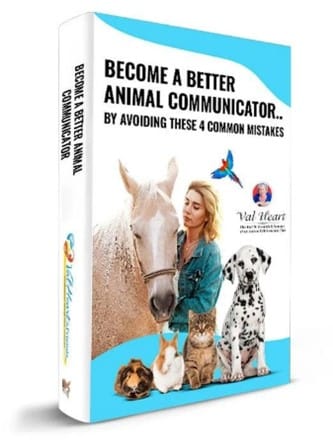
Wondering where your communication is breaking down?
Becoming a Better Animal Communicator By Avoiding These 4 Common Mistakes - the habits that quietly block connection and meaning even when your receiving is accurate.
Your Real Role Isn't "Messenger" - It's Translator
Professional animal communication is not just about receiving. It's about interpreting what you receive, contextualizing what the animal shares, translating intuitive messages into something a human being can actually use, and helping the client understand what matters.
You're not there to deliver raw telepathic data. You're there to help a human being make sense of what their animal is communicating in a way that feels meaningful, safe, and relevant - to both of them.
That's a very different skill set. And it's what separates intuitive ability from professional mastery.
Unfortunately, it's also the one most communicators are never formally taught. Flying by the seat of your pants trying to figure it out on your own can lead to heartache, discouragement, and is the cause of many good communicators stopping their practice entirely.
Don't let that happen. This work is your mission. It's important to get this right.
A More Empowering Question to Ask Yourself
Instead of:
"Was I accurate?"
Try:
That single shift changes everything. It moves you from self-judgment to professional discernment. And it opens the door to real growth in your practice.
What Actually Helps When a Client Isn't Satisfied With Their Reading
Here's a grounded, ethical, responsible way to work with these moments:
Ask yourself: What did I actually receive? How did I choose to interpret it? How did I present it, and could I have expressed it differently? What other interpretations could there be?
Sometimes the information is fine - the gap is in the framing. Sometimes you need to go back to the animal and ask for clarification. You are facilitating a multi-way conversation, not a human-centered interrogation.
Why did they book the session? A behavior issue? A health concern? Emotional closure? An animal in spirit? If your reading didn't clearly address their real question, they may feel unsatisfied - even if the communication itself was genuine.
Did you explain symbolic messages? Check for understanding? Translate emotional themes? Guide meaning gently? Or did you assume the client would "just get it"?
Clients don't live inside intuitive language the way we do. They need bridges.
Instead of "I'm not good enough," try: "What is this experience teaching me about how I communicate with humans, and where I can improve my translation skills?"
That's where professional skill actually develops.
The Hidden Truth Most Communicators Don't Realize
When a client doesn't like your animal communication reading, it's rarely about psychic ability.
It's about discernment, interpretation, listening, relational presence, and professional communication skills.
Not: "Can you receive?"
But: "Can you facilitate understanding between species?"
That's the real line between beginner intuition and professional animal communication mastery. And it's exactly the kind of skill that The Heart School of Animal Communication® was built to develop - because it goes far beyond basic technique into the full art of the work.
A Loving Reframe (The One I Wish Every Communicator Knew)
If a client doesn't like your reading, it doesn't mean something went wrong.
It usually means something deeper is trying to be heard, discovered, and learned.
Professional animal communication isn't about saying everything you receive.
It's about knowing what the animal is asking you to help the human understand.
A client not liking your animal communication reading does not mean you failed. It means you're standing at the edge of your next level of mastery - the level where you trust yourself more than external validation, where you stop needing to be right to be confident, and where you can hold your role without shrinking or hardening.
That's when you stop being someone who hopes they can help, and start becoming someone others experience as steady, grounded, and professional.
Becoming a professional isn't about being perfect. It's about learning how to hold yourself when things feel imperfect. And if you're ready to grow that skill with proper guidance - not trial and error alone - my Advanced Animal Communication with the Heart Wisdom Method® is a great place to deepen your foundation.
Ready for Real Mentoring and Professional-Level Guidance?
Client dissatisfaction. Censoring yourself. Wondering if you got it wrong. These are exactly the kinds of situations we work with deeply inside the Animal Talk Coaching & Mastery Club® - not just improving your intuitive skills, but helping you grow into the role of a confident, grounded professional communicator.
If you're serious about growing your confidence and skill - learning not just how to receive information, but how to listen, interpret, translate, and serve animals and their people with integrity - you're invited to join us.
Inside the Club, you'll receive:
- Ongoing mentoring and live guidance through real cases, not hypotheticals
- Advanced training beyond the basics
- Professional discernment skills - knowing what to do when things don't resolve easily
- A supportive community of dedicated animal communicators committed to doing better work
This is where intuitive ability becomes grounded, ethical, confident professional practice. That's where the Heart Wisdom Method of listening becomes an empowering, healing art - for you and the clients you serve.
Learn More About the Animal Talk Coaching & Mastery Club®Continue Your Learning Journey
When Animal Communication Doesn't Work to Change Behavior
Why understanding what an animal says isn't always enough - and what experienced communicators do differently when things don't shift.
Why Advanced Communicators Still Need Community & Expert Mentoring
How experienced communicators grow beyond what self-study can offer - and why the most skilled practitioners keep learning.
The Subtle Listening Mistakes Even Experienced Communicators Make
The habits that quietly undermine accuracy and trust - even in communicators who have been practicing for years.



Leave a Reply