• Skip to primary navigation
  • Skip to main content
  • Skip to primary sidebar
Learn How To Talk To Animals

Learn How To Talk To Animals

Animal Communication Training with Val Heart

  • About Val
          • Meet Val Heart
          • Everything You Need to Know About Animal Communication
          • How to Train With Val
          • Raising the Standards in Animal Communication
          • Book Val For Your Podcast
  • Start Training Here
          • Animal Communication Online Courses and Classes
          • Animal Talk Coaching & Mastery Club® Membership
          • Heart Wisdom Masterclasses for Advanced Training
          • Animal Talk Student Coaching
          • The Heart Wisdom Method®
  • Start Training Here
        • Courses

          • All Animal Communication Online Courses
          • Animal Communication E-book (free)
          • Beginning Core Foundations Course
          • Advanced Animal Talk Mastery Course
          • Professional Animal Communicator Business Building Course
          • Special Topic Courses
          • Do you have what it takes to be an Animal Communicator?
        • Memberships

          • Elite Platinum AnimalTalk Coaching & Mastery Club Heart Wisdom Masterclasses PLUS Membership
          • Gold AnimalTalk Coaching & Mastery Club Live Q&A PLUS Membership
          • Silver AnimalTalk Coaching & Mastery Club Membership
        • Coaching

          • Animal Talk Student Coaching
          • Animal Problem Solving Session
          • Healing for You and Your Pet Session
          • Professional Animal Communication Business Mentoring
        • Masterclasses

          • Advanced Animal Talk Heart Wisdom Masterclasses
  • Animal Talk Blog
  • #1 Bestselling Book
  • Student Login
  • FAQ

Written by Val Heart • Published 03/09/2026 • Reading Time 5 Minutes

Why So Many Animal Communicators Feel Like Frauds (And What’s Really Going On)

Professional Standards in Animal Communication — Part 3

This is Part 3 of the Professional Standards in Animal Communication series. Start with Part 1: When Animal Communication Doesn't Work to Change Behavior or Part 2: Why Advanced Communicators Still Need Community & Expert Mentoring.

animal communicator imposter syndrome

Animal communicator imposter syndrome is far more common than anyone talks about. At some point in their journey, almost every animal communicator has the same quiet thought

"What if I'm just making this up?"

They might not say it out loud.

They might be highly intuitive. They might have had real, meaningful experiences. They might even have happy clients.

And still… the doubt creeps in.

  • Am I imagining this?
  • Was that really the animal, or just my mind?
  • What if I'm getting it wrong?
  • What if I'm not actually good at this?
  • What if I'm a fraud?

This is so common in animal communication that I almost consider it a developmental stage.

Not a problem.

A phase.


The Hidden Epidemic in Intuitive Work

In more than 30 years of teaching and mentoring animal communicators, I've seen this pattern repeat over and over:

The more intuitive and sensitive someone is, the more likely they are to doubt themselves.

Which seems completely backwards.

But it makes sense when you understand how intuitive communication actually works.

Animals communicate through:

  • feelings
  • sensations
  • images
  • energetic impressions
  • subtle emotional states

Not through linear language. Not through logic. Not through anything most of us were taught to trust.

So when you receive information this way, your mind immediately asks:

"How do I prove this?"

And when it can't, it defaults to:

"It must be imaginary."


Why This Doesn't Happen in Other Professions

You don't hear accountants saying: "What if I'm imagining these numbers?"

You don't hear dentists saying: "What if this tooth isn't real?"

Because those professions are built on external, visible feedback systems.

Animal communication is not.

It's internal. Subtle. Subjective. Experiential. Relational.

Which means your nervous system is constantly navigating uncertainty. And the mind hates uncertainty.

So it creates a story:

"I must not be good enough yet."

Or worse:

"I'm probably fooling myself."


The Real Root of Animal Communicator Imposter Syndrome

Here's the part most people don't realize:

Feeling like a fraud is not a sign that you're bad at animal communication.

It's a sign that you are:

  • sensitive
  • self-aware
  • ethical
  • honest
  • taking this seriously
  • unwilling to mislead anyone

In other words… it's a sign of integrity. Not incompetence.

The people who never question themselves are rarely the most accurate.

They're usually the ones who over-interpret, project their own emotions, jump to conclusions, or don't notice when they're wrong.

Healthy doubt is part of professional maturity. The problem is only when doubt turns into paralysis.


What's Actually Going On Energetically

Most animal communicators are operating in three layers at once:

  • The animal's communication
  • Their own emotional field
  • The client's expectations and energy

That's a lot to hold.

And when those fields overlap, it can feel like:

  • I don't know which part is mine.
  • I don't know if I'm influencing this.
  • I don't know what's real anymore.

So the mind steps in and says: "Let's just assume we're wrong."

Which feels safer than trusting something you can't see.


The Difference Between Beginners and Professionals

This is one of the biggest differences I see between hobbyists and professional animal communicators:

Beginners think confidence comes from being certain. Professionals know confidence comes from discernment.

From learning how to:

  • track where information is coming from
  • notice emotional interference
  • separate imagination from intuition
  • validate experiences through patterns
  • stay present without forcing meaning
  • ask better questions
  • remain open instead of defensive

In other words, confidence isn't something you decide.

It's something you develop — through experience, reflection, feedback, and mentoring.

And through learning how your own intuitive system works.
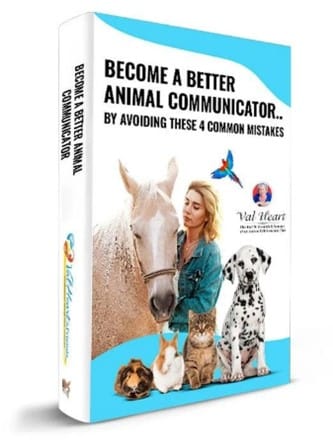
Free eWorkbook: Becoming a Better Animal Communicator

Wondering if the doubt is yours or something else? Start here:

Becoming a Better Animal Communicator By Avoiding These 4 Common Mistakes — discover the quiet habits that keep even sensitive communicators second-guessing themselves.

👉 Download Your Free eWorkbook Here


A Reframe That Changes Everything

Here's the reframe I offer all my students:

Feeling like a fraud doesn't mean you shouldn't be doing this.
It means you're in the middle of learning something subtle, complex, and deeply relational.

You're learning a new language.

A heart language.

And you're doing it in a world that taught you to trust only what you can measure.

Of course it feels unstable at first.

That doesn't make you a fraud.

It makes you a beginner on a very real professional path.


The Quiet Truth Most People Don't Hear

Most animal communicators don't need more ability.

They need:

  • better discernment
  • more embodied practice
  • feedback and validation
  • supportive mentoring
  • a safe space to grow

Because the issue is rarely lack of intuition.

It's lack of context, confidence, and containment.

Once those are in place, something shifts.

The doubt softens. The signal clarifies. And trust replaces strain.

Not because you tried harder.

But because you learned how to listen more skillfully.


You Don't Have to Figure This Out Alone

Imposter syndrome is not a flaw.

It's a stage of professional development in intuitive work — and it's one I walk students through every single week inside the Animal Talk Coaching & Mastery Club®.

If this post resonated, it's because you're already walking the path. You're already asking the right questions. And that matters.

Ready to build real discernment and professional-level confidence?

Inside the Club, you'll experience:

  • Expert mentoring through real cases, not hypotheticals
  • Live Q&A classes where decision-making is modeled step by step
  • Guidance on separating your own energy from what the animal is sharing
  • A thoughtful community of communicators who take this work seriously

This is where doubt becomes discernment — and discernment becomes confidence you can trust.

👉 Learn More About The Animal Talk Coaching & Mastery Club®

Because animals benefit most when the people communicating for them aren't operating from a place of quiet, chronic self-doubt — and communicators grow fastest when they're mentored, not isolated.

👉 Get the FREE eWorkbook: Becoming a Better Animal Communicator By Avoiding These 4 Common Mistakes


Continue Your Learning Journey

Why It Feels Like You're Making It Up (When You're Not)

If you receive quiet impressions and then immediately doubt them, this explains what's really happening — and how to tell the difference between intuition and imagination.

How Do You Know You're Doing This Right? Why Learning in Isolation Falls Short

Learn why practicing alone creates blind spots — and how feedback, community, and mentorship transform your communication skills over time.

The Subtle Listening Mistakes Even Experienced Communicators Make

Skill and experience aren't always enough. Discover what animals are actually responding to — and where even good communicators quietly lose the thread.

Why Advanced Communicators Still Need Community & Expert Mentoring

Discover why expert mentoring becomes essential when you reach the level where intuition alone isn't enough anymore.

Related Posts

Why Get a Private Animal Communication Session with Me?

Professional Standards in Animal Communication — Part 3 This is Part 3 of the Professional Standards in Animal Communication series. Start with Part 1: When Animal Communication Doesn't Work to Change Behavior or Part 2: Why Advanced Communicators Still Need Community & Expert Mentoring. Animal communicator imposter syndrome is far more common than anyone talks […]
Learn More

Where’s the Proof? How Do You Know if You’re Really Communicating With Animals?

Professional Standards in Animal Communication — Part 3 This is Part 3 of the Professional Standards in Animal Communication series. Start with Part 1: When Animal Communication Doesn't Work to Change Behavior or Part 2: Why Advanced Communicators Still Need Community & Expert Mentoring. Animal communicator imposter syndrome is far more common than anyone talks […]
Learn More

Why Does Animal Communication Work Sometimes But Not Others?

Professional Standards in Animal Communication — Part 3 This is Part 3 of the Professional Standards in Animal Communication series. Start with Part 1: When Animal Communication Doesn't Work to Change Behavior or Part 2: Why Advanced Communicators Still Need Community & Expert Mentoring. Animal communicator imposter syndrome is far more common than anyone talks […]
Learn More

Filed Under: Animal Communication, Professional Animal Communication

Reader Interactions

Leave a Reply Cancel reply

Your email address will not be published. Required fields are marked *

Primary Sidebar

Visit the Forum Now

Search Forum

What’s new in the Forum?

  • Platinum Members Heart Wisdom Method Using a Pendulum Part 4, March 21st, Open Q&A and Integration Practice ~ Add your questions for Val
  • Accountability March 5th – March 11th, 2026! Post & earn free session with Val
  • Gold & Platinum members Q&A Call March14th, 2026
  • Lori is our Featured Animal Teacher (FAT) for March 2026
  • Accountability February 26th – March 4th, 2026! Post & earn free session with Val

Newest Blog Posts

Why So Many Animal Communicators Feel Like Frauds (And What’s Really Going On)

animal communication training

Charging More For Your Services Isn’t the Problem – Lack of Skill Is

animal communication accuracy

What To Do If a Client Doesn’t Like Your Reading

animal communication skills

The Pig in the Pasture: What Real Animal Communication Skills Look Like Under Pressure

charging for your services

If You Feel Guilty Charging For Your Services, Read This

professional animal communciator

How to Attract the Right Clients as a Professional Animal Communicator

{“0”:[“control-titles”,”6″],”1″:[“link-targets”,”25″],”2″:[“control-tabindex”,”5″],”3″:[“link-add-tabindex”,”2″],”timestamp”:1751487926}

Val Heart & The Heart School of Animal Communication — The authority on heart-based, professional animal communication training, spanning intuition, healing, ethics, discernment, and sustainable practice.

  • Contact Us

  • 1-805-PET-TALK

  • www.LearnHowToTalkToAnimals.com

© 2026 - Heart Communications Enterprises Inc. All rights reserved.

Val Heart, Animal Talk

© 2026 - Heart Communications Enterprises Inc.

  • Disclaimer

  • Terms & Conditions

  • Privacy Policy

  • Cookie Policy

  • AI Content Disclaimer

  • Private Consulting

  • Affiliate

This website uses cookies to improve your experience. We'll assume you're ok with this, but you can opt-out if you wish.Accept Read More
Privacy & Cookies Policy

Privacy Overview

This website uses cookies to improve your experience while you navigate through the website. Out of these cookies, the cookies that are categorized as necessary are stored on your browser as they are essential for the working of basic functionalities of the website. We also use third-party cookies that help us analyze and understand how you use this website. These cookies will be stored in your browser only with your consent. You also have the option to opt-out of these cookies. But opting out of some of these cookies may have an effect on your browsing experience.
Necessary
Always Enabled
Necessary cookies are absolutely essential for the website to function properly. This category only includes cookies that ensures basic functionalities and security features of the website. These cookies do not store any personal information.
Functional
Functional cookies help to perform certain functionalities like sharing the content of the website on social media platforms, collect feedbacks, and other third-party features.
CookieDurationDescription
__cf_bm30 minutesThis cookie is set by CloudFlare. The cookie is used to support Cloudflare Bot Management.
bcookie2 yearsThis cookie is set by linkedIn. The purpose of the cookie is to enable LinkedIn functionalities on the page.
langsessionThis cookie is used to store the language preferences of a user to serve up content in that stored language the next time user visit the website.
lidc1 dayThis cookie is set by LinkedIn and used for routing.
sssessionThis cookie is set by the provider Eventbrite. This cookie is used for the functionality of website chat-box function.
TawkConnectionTimesessionThis cookie is set by Tawk.to which is a live chat functionality. The cookie is used to remember users so that previous chats can be linked together to provide better and improved service.
Performance
Performance cookies are used to understand and analyze the key performance indexes of the website which helps in delivering a better user experience for the visitors.
CookieDurationDescription
GCLB12 hoursThis cookie is known as Google Cloud Load Balancer set by the provider Google. This cookie is used for external HTTPS load balancing of the cloud infrastructure with Google.
Analytics
Analytical cookies are used to understand how visitors interact with the website. These cookies help provide information on metrics the number of visitors, bounce rate, traffic source, etc.
CookieDurationDescription
_ga2 yearsThis cookie is installed by Google Analytics. The cookie is used to calculate visitor, session, campaign data and keep track of site usage for the site's analytics report. The cookies store information anonymously and assign a randomly generated number to identify unique visitors.
_gat_gtag_UA_79299727_11 minuteThis cookie is set by Google and is used to distinguish users.
_gid1 dayThis cookie is installed by Google Analytics. The cookie is used to store information of how visitors use a website and helps in creating an analytics report of how the website is doing. The data collected including the number visitors, the source where they have come from, and the pages visted in an anonymous form.
_hjFirstSeen30 minutesThis is set by Hotjar to identify a new user’s first session. It stores a true/false value, indicating whether this was the first time Hotjar saw this user. It is used by Recording filters to identify new user sessions.
vuid2 yearsThis domain of this cookie is owned by Vimeo. This cookie is used by vimeo to collect tracking information. It sets a unique ID to embed videos to the website.
Advertisement
Advertisement cookies are used to provide visitors with relevant ads and marketing campaigns. These cookies track visitors across websites and collect information to provide customized ads.
CookieDurationDescription
_fbp3 monthsThis cookie is set by Facebook to deliver advertisement when they are on Facebook or a digital platform powered by Facebook advertising after visiting this website.
bscookie2 yearsThis cookie is a browser ID cookie set by Linked share Buttons and ad tags.
centerVisitorId7978 years 7 months 21 days 8 hours 22 minutesThis is a HTTP cookie used to track the individual sessions on the website. It helps the website to compile statistical data from multiple visits. This data is used for lead generation as a part of marketing purpose.
fr3 monthsThe cookie is set by Facebook to show relevant advertisments to the users and measure and improve the advertisements. The cookie also tracks the behavior of the user across the web on sites that have Facebook pixel or Facebook social plugin.
test_cookie15 minutesThis cookie is set by doubleclick.net. The purpose of the cookie is to determine if the user's browser supports cookies.
Others
Other uncategorized cookies are those that are being analyzed and have not been classified into a category as yet.
CookieDurationDescription
_gat_gtag_UA_125844239_21 minuteNo description
_hjAbsoluteSessionInProgress30 minutesNo description
_hjid1 yearThis cookie is set by Hotjar. This cookie is set when the customer first lands on a page with the Hotjar script. It is used to persist the random user ID, unique to that site on the browser. This ensures that behavior in subsequent visits to the same site will be attributed to the same user ID.
_hjIncludedInPageviewSample2 minutesNo description
AnalyticsSyncHistory1 monthNo description
AWSALB7 daysAWSALB is a cookie generated by the Application load balancer in the Amazon Web Services. It works slightly different from AWSELB.
cookielawinfo-checkbox-functional1 yearThe cookie is set by GDPR cookie consent to record the user consent for the cookies in the category "Functional".
cookielawinfo-checkbox-others1 yearNo description
InfusionsoftTrackingCookie1 yearNo description
loom_anon_commentsessionNo description
loom_referral_videosessionNo description
session7 daysNo description
UserMatchHistory1 monthLinkedin - Used to track visitors on multiple websites, in order to present relevant advertisement based on the visitor's preferences.
view.bf4zyACmsMvefQTiwtGXwE-default-prop.sj8geLicj843pgSuZjc7S41 dayNo description
ZDEDebuggerPresentNo description
SAVE & ACCEPT
Powered by CookieYes Logo