
Most people assume that if you become a professional animal communicator, it must be because you love working with people.
Here's the truth.
I didn't.
I got into this work because I loved animals. Deeply.
I loved their honesty. Their sensitivity. Their emotional intelligence. Their way of communicating without pretense, politics, or performance.
People, on the other hand?
I found confusing. Overwhelming. Emotionally messy. And honestly… exhausting.
For a long time, I secretly hoped I could build a career communicating with animals and somehow skip the whole "working with people" part entirely.
Spoiler alert: that didn't happen.
Because every animal comes with a human attached.
And it turns out, if you want to become a truly effective and professional animal communicator, the animals are actually the easy part.
It's the people that stretch you.
The Part No One Talks About in Animal Communication Training
This is something almost no one says out loud, but I've heard it from hundreds — maybe thousands — of students over the years:
"I love animals. I just don't really like working with people."
Some people say it gently. Some say it with guilt. Some say it with a laugh.
But the feeling is the same.
They're drawn to animal communication because animals feel safer. Cleaner. More emotionally straightforward.
And yet, the moment you step into professional animal communication, you're suddenly dealing with:
- Clients who are anxious
- Clients who are grieving
- Clients who want answers you can't ethically give
- Clients who project their emotions onto their animals
- Clients who don't always hear what you're actually saying
No one prepares you for this part.
Most animal communication training focuses on how to connect with animals. Very little teaches you how to hold space for humans.
What I Didn't Expect
What I didn't expect was this:
It forced me to develop:
- Emotional intelligence
- Energetic boundaries
- Discernment
- Compassion without over-giving
- The ability to stay grounded under pressure
- The skill of listening on multiple levels at once
In other words, it matured me. Not just as a practitioner. But as a human being.
I often say — half joking, half completely serious:
I never wanted to work with people. But working with people is what made me professional.
The Real Difference Between Hobbyists and Professionals
Here's one of the biggest distinctions I see between people who dabble in animal communication and those who build a sustainable, ethical professional practice:
Hobbyists focus almost entirely on the animals.
Professionals learn how to work with the human-animal relationship.
That means understanding:
- How people process grief
- How expectations affect perception
- How emotions shape interpretation
- How trauma shows up in sessions
- How to communicate gently but clearly
- How to manage sessions in real time
- How to hold the emotional field without absorbing it
None of that comes naturally just because you're intuitive.
It's learned. Through experience. Through mistakes. Through reflection. Through mentoring. And through a lot of inner work.
This is why professional animal communication training isn't just about developing intuitive skills. It's about developing yourself.
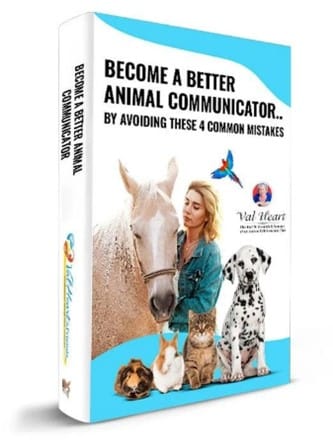
Sensing there's more to this than technique? Start here — it's free:
Becoming a Better Animal Communicator By Avoiding These 4 Common Mistakes — discover the habits that separate communicators who plateau from those who grow into true professionals.
Why This Matters More Than You Think
If you want to work professionally as an animal communicator, at some point you will face:
- A client who doesn't like your reading
- A client who wants certainty you can't provide
- A client who is emotionally overwhelmed
- A client who projects their fears onto you
- A client who expects you to "fix" everything
And in those moments, your success won't depend on how clearly you heard the animal.
It will depend on:
- How grounded you are
- How well you hold emotional space
- How you communicate boundaries
- How you manage expectations
- How you stay present instead of reactive
In other words… it will depend on how well you work with people.
This is also why understanding emotional intelligence in helping professions matters so much — the human side of the session is not a distraction from your work. It is the work.
The Unexpected Gift
Here's the part I never saw coming.
Learning how to work with people didn't pull me away from animals.
It brought me closer.
It refined my listening. Deepened my compassion. Strengthened my intuition. Improved my accuracy. And made my communication with animals far more nuanced and trustworthy.
Because animals don't exist in isolation.
They live inside relationships. Emotional systems. Family dynamics. Energy fields shared with humans.
And the more I learned to navigate the human side of those systems, the more clearly I could hear the animals within them.
The Human-Animal System
When you understand how humans carry grief, project emotion, and unconsciously shape the energetic field around their animals, your readings become dramatically more accurate — because you're working with the whole picture, not just the animal in isolation.
A Quiet Truth for Aspiring Professionals
If you're someone who feels drawn to animal communication but secretly thinks: "I'm better with animals than people…"
You're not alone.
In fact, you're in very good company.
Just know this:
Because the path of becoming a professional animal communicator is not just about learning to hear animals.
It's about learning to hold the entire field of relationship — with clarity, compassion, and integrity.
Animals may be the reason you begin.
But people are often the reason you become truly great at what you do.
Want Support Growing as a Professional Animal Communicator?
If this post resonated, it's because you're already sensing what most people never talk about in this field.
Professional animal communication isn't just about hearing animals. It's about learning how to hold emotional space, work with clients, and grow into your role with clarity and confidence.
That's exactly what I teach inside the Animal Talk Coaching & Mastery Club®, where I mentor communicators at all levels through live coaching, masterclasses, and professional development training.
Inside this mentoring-based learning environment you'll experience expert mentoring through real cases, not hypotheticals, live Q&A coaching classes where decision-making is modeled step by step, guidance on when communication is enough and when something more is needed, and a thoughtful community of communicators who are committed to doing better work.
This is where intuitive ability becomes grounded, ethical, confident professional practice.
Learn More About the Animal Talk Coaching & Mastery Club®Continue Your Journey
This post is part of the Professional Animal Communication Teaching Series. Keep reading:

Leave a Reply