
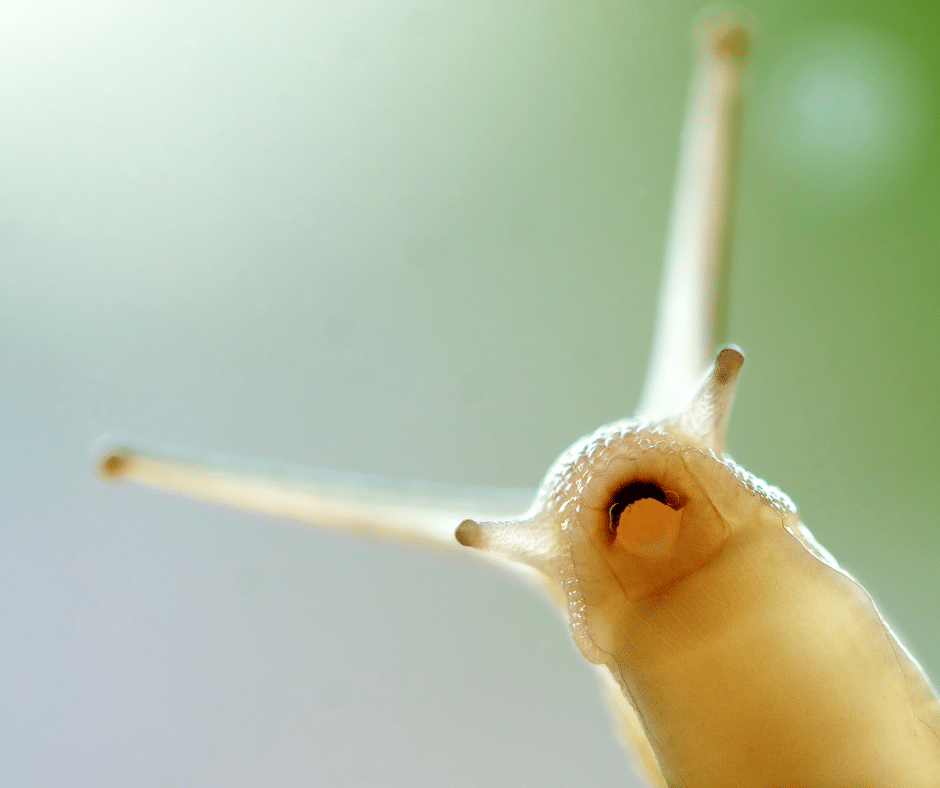
Not many people know this, but my very first entrepreneurial business, when I was 28 years old, was as a snail farmer.
Yes. Really. A snail farmer.
I was so excited.
I joined the Snail Farmers Association of America.
I named my company Texcargo (a playful mix of Texas and Escargot).
And my mission was to supply fresh, live, happy delicious snails to the best restaurants in town.
I had big dreams. Being a snail farmer was going to be my path to entrepreneurial success.
Possessing very few actual carpenter skills, I nevertheless built a snail corral in my backyard to contain my little slimy beasties. I went out gathering the perfect snails for my collection and worked very hard to create the ideal environment for them to flourish and multiply.
And multiply they did.
Soon I had tiny, BB-sized snail babies climbing everywhere.
They were so CUTE!!! Adorable really, once you got past the whole slimy thing and saw their darling innocent eyes and searching for information and connection feelers.
I planned their diets carefully.
Made sure they were happy.
Gave them fresh plants, herbs, and even built a tiny jungle gym out of branches and yummy plants and leaves so they could explore and play.
Yes. My snails had their own playground.
As a dedicated snail farmer, I was committed to giving them the best life possible.
I started talking to restaurant owners.
Lining up contracts.
Planning delivery schedules.
Everything was going perfectly.
Until… I started communicating with them.
When the Snail Farmer Empire Business Plan Fell Apart
As I spent more time with the snails, I began to know them.
Not just observe them.
But feel them.
Their personalities.
Their sensitivity.
Their gentle, sweet, curious nature.
I started playing with them. And they responded to me in interesting and unusual ways.
And then… I started naming them.
That's when I realized I had a problem.
Because once you name someone, it becomes very difficult to… well… eat them.
Shortly after that, my little friends figured out how to escape their corral.
In spite of my best efforts to herd them back, I couldn't round them up. They wandered off into the world, free at last.
And so, in retrospect, I'm happy to say my snail farm never got off the ground.
I lost a business.
But I gained something far more important.
The Lesson They Taught Me
Those snails taught me something I've carried with me my entire life.
We leave energetic footprints wherever we go.
Whoever we are.
Whatever body we happen to be wearing.
Every being has a presence.
A field.
A way of communicating beyond words.
And when we truly open our hearts, we don't just see other beings.
We feel them.
This kind of empathy and emotional awareness is what transforms any helping profession — and it's especially powerful when working with animals.
That's where real communication begins.
Not with techniques.
Not with performance.
Not with outcomes.
But with relationship.
How This Snail Farmer Story Became My Life's Work
Looking back, I can see that my snail farm was actually the first step on the path that eventually became my life's work: animal communication.
At the time, I didn't know I was learning how to listen.
I didn't know I was developing sensitivity, presence, and heart-based awareness.
I just knew that once I truly connected with another being — even as a snail farmer — I could no longer treat them as an object, a product, or a means to an end.
I had to relate to them as a soul.
That's still the foundation of everything I teach today.
Whether I'm working with animals, mentoring students, or guiding professional animal communicators, the principle is the same. This kind of emotional intelligence in helping professions creates the foundation for genuine connection:
Real communication happens through the heart.
Through empathy.
Through awareness.
Through relationship.
Through love.
Why This Still Matters
In a world that often encourages us to move faster, optimize everything, and treat beings as resources, animals quietly remind us of something different.
They remind us how to slow down.
How to feel.
How to listen.
How to be present.
They don't need us to fix them.
They need us to meet them.
And sometimes, they teach us more than we ever imagined.
Even if they're tiny, slimy, and live in a snail corral in your backyard.
Even if you started as a snail farmer with completely different plans.
An Invitation
If this story resonated with you, it may be because you already sense what animals are here to teach us.
Other species have voices.
Feelings.
Wisdom.
And divine spirits, just like we do.
They need us to be able to hear them.
To recognize them.
To respect them.
To revere them.
And ultimately, they can become our greatest teachers — if we know how to learn from them.
That's the path I've been walking for over 30 years.
And I'd love to share it with you.
👉 Learn how I teach heart-based animal communication
or
👉 Discover mentoring for animal communicators
Ready to Go Deeper?
If this story speaks to something you already feel, you may be exactly who this work is for.
Inside the Animal Talk Coaching & Mastery Club®, you're not left to figure things out on your own.
This is a mentoring-based learning environment where you'll experience expert mentoring through real cases, not hypotheticals, live Q&A coaching classes where decision-making is modeled step by step, guidance on when communication is enough and when something more is needed, and a thoughtful community of communicators who are committed to doing better work.
This is where communicators learn how to deepen their listening, improve their accuracy, and get better results for the animals and people they serve.
Because animals don't need us to be impressive. They need us to be present. And that can be learned.
Learn More About the Animal Talk Coaching & Mastery Club®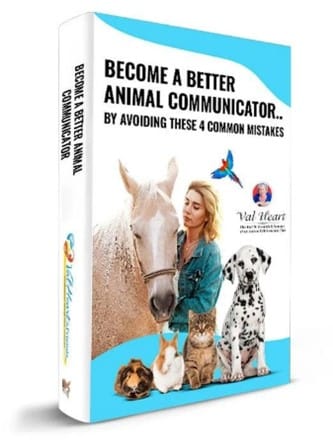
Want to improve faster? Grab this free resource:
Becoming a Better Animal Communicator By Avoiding These 4 Common Mistakes — discover the hidden habits that quietly limit your results.
Continue Your Learning Journey
Why Advanced Animal Communicators Still Need Community & Expert Mentoring
Discover why expert mentoring becomes essential when you reach a point where basic training isn't enough anymore.
How Do You Know You're Doing This Right?
Learn why practicing alone creates blind spots and how feedback, community, and mentorship transform your communication skills.
When Animal Communication Doesn't Work to Change Behavior
Have you ever communicated with an animal about a behavior problem but nothing actually changed? Learn what to do when communication alone isn't enough.


Leave a Reply